Recovery I can actually feel
I've been running for 20 years and lifting for 10. After turning 52, my recovery tanked. Two weeks on Bare Aminos and I could feel the difference — less stiffness, more energy on my second session of the day.
Have an account? Log in to check out faster.
A growing body of research explains why active women over 50 struggle with recovery — even when they're doing everything right. The answer isn't more effort. It's a biological shift nobody told her about.
She's up at 5am three mornings a week. Parkrun on Saturdays. Strength training on the days between. She tracks her macros, eats her protein, goes to bed before 10pm. She has done this for years.
But lately, something is off. The soreness after a hard session used to last a day. Now it lingers for three. The legs that used to feel springy on Tuesday feel heavy and flat. Her pace is slipping — not dramatically, but enough that she notices. Enough that it bothers her.
She hasn't changed anything. So why has her body changed the deal?
Researchers call it anabolic resistance — the age-related decline in your body's ability to convert dietary protein into muscle repair. It's not a disease. It's not a deficiency. It's biology.
A landmark review in Nutrition Reviews (Wall et al., 2015) found that the muscle protein synthesis response to a standard 20g protein dose is 16–30% lower in adults over 50 compared to younger adults.
At the same time, your body's leucine threshold increases by roughly 60% (Katsanos et al., 2006). Leucine is the amino acid that triggers muscle repair. At 30, a standard meal crosses that threshold easily. At 55, the same meal falls short.
And there's a third factor that few people know about: splanchnic extraction. As you age, your gut and liver retain more of the amino acids from food before they ever reach your muscles. Research shows that roughly 50% of dietary leucine is absorbed in the gut of older adults, compared to just 25% in younger people (Volpi et al., 1999).
The result? She's eating enough protein. Her body just can't use it efficiently anymore.
"Aging muscles need approximately 60% more leucine per feeding to trigger the same muscle protein synthesis response as younger adults." — Katsanos et al., American Journal of Clinical Nutrition, 2006
A 2016 study in the European Journal of Sport Science (Doering et al.) compared recovery markers between masters athletes over 50 and younger athletes following eccentric exercise — the kind of muscle loading that comes from hill running, weight training, and high-intensity sport.
The results were stark. Masters athletes showed:
34% higher peak creatine kinase levels — a direct marker of muscle damage.
24–48 hours longer to recover force production.
Extended DOMS (delayed onset muscle soreness) duration.
Critically, a separate study (Pollock et al., 2018) found that even highly active older adults — those who exercise regularly — still show blunted muscle protein synthesis compared to young controls. Exercise helps, but it doesn't fully overcome anabolic resistance.
This is the gap. She trains harder than most people half her age. But her recovery infrastructure has changed, and no amount of discipline can override the biology without the right nutritional support.
Free-form Essential Amino Acids (EAAs) work differently from whole protein. They don't need to be digested. They don't need to be broken down from peptide chains. They absorb directly through the upper small intestine in roughly 15 minutes.
This matters because they bypass the two bottlenecks that slow recovery after 50: slow digestion and increased splanchnic extraction.
Research by Robert Wolfe (JISSN, 2017) — one of the world's leading protein metabolism researchers — found that free-form EAAs bypass the splanchnic bed more effectively than whole protein, delivering a sharper, faster spike in blood amino acid levels. This sharper spike is exactly what older muscles need to cross the elevated leucine threshold.
A pivotal study by Paddon-Jones et al. (2004) showed that 15g of EAAs produced approximately 50% greater acute muscle protein synthesis than an equivalent amount of mixed-meal protein in older adults aged 60–75.
Put simply: EAAs get more of what your muscles need, to your muscles, faster. And that changes the recovery equation.
"Free-form essential amino acids produced approximately 50% greater muscle protein synthesis response compared to equivalent mixed-meal protein in adults 60–75." — Paddon-Jones et al., AJP-Endocrinology & Metabolism, 2004
Research-backed reasons why recovery changes after 50 — and how EAAs close the gap.
Leucine needed to trigger MPS increases ~60% after 50
EAAs absorb in 15 minutes vs 2–3 hours for whole protein
EAAs vs whole protein for muscle repair in adults 60+
Per serving — above the leucine threshold for adults 50+
Verified buyers who train hard and recover smarter with Bare Aminos.
I've been running for 20 years and lifting for 10. After turning 52, my recovery tanked. Two weeks on Bare Aminos and I could feel the difference — less stiffness, more energy on my second session of the day.
Switched from BCAAs to Bare Aminos after reading about the full EAA spectrum. Night and day difference. My legs don't feel like bricks the morning after a hard hill session anymore.
My biokineticist suggested I look into EAAs after I kept pulling up sore from training. Bare was the cleanest option I could find in SA. Taste is great and no bloating whatsoever.
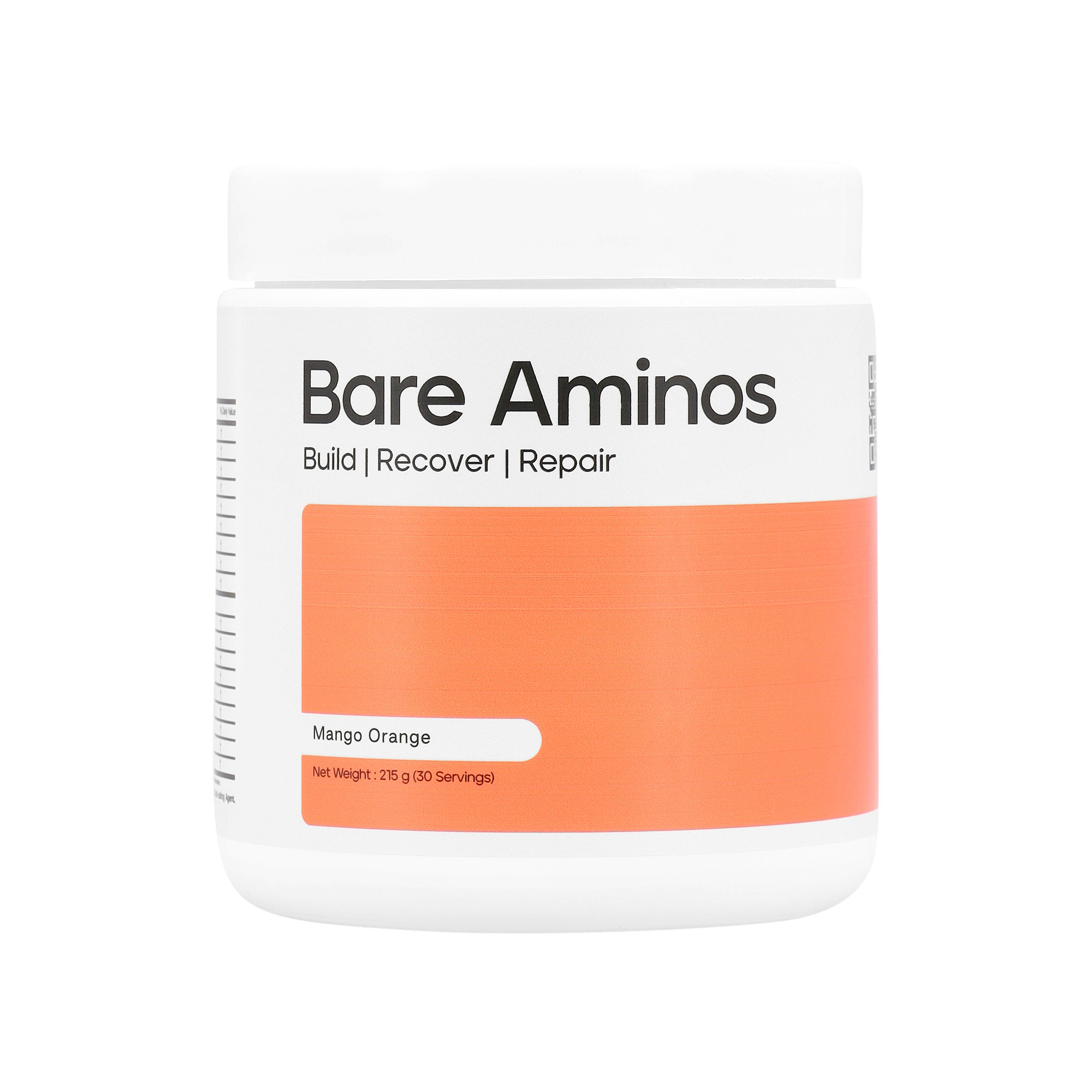
Your body changed after 50. Your nutrition should change too. Bare Aminos delivers all 9 essential amino acids in a leucine-enriched ratio — formulated for the way your body works now, not the way it worked at 30.