A practical guide 8 min read / Bare Journal · No. 06 / June 2026

Five things your pre-surf bottle is actually asking for.

Pre-surf hydration is not one thing. It is five specific demands your physiology places on the flask between the kettle and the carpark — and most products on the SA shelf are answering one or two at best. A numbered guide.

In this guide.

  1. The right sodium dose — and why 1,000 mg before a dawn patrol is a marathon dose
  2. Amino-acid co-transport — the faster pathway no SA hydration brand has shipped yet
  3. Zero sugar — why a glucose-driven hydrator doesn't fit a 5am paddle
  4. The 2g leucine pre-load — pre-surf MPS for the 40+ surfer
  5. SA-made — why the grey-import salt stick was never the right answer
01— The right sodium dose
i.Sodium

Your sweat rate is 0.3 litres per hour.
The category dosed for 1.5.

The single number the hydration category competes on is sodium per serve. The benchmark was set by the international high-sodium leader at 1,000 mg — engineered for Navy SEAL training in the Mojave and CrossFit athletes doing two hours of work in 35-degree heat. The dose follows the problem.

The problem you have at 5:30 in the morning at Muizenberg is not that problem. Caldwell et al. (2022) measured a two-hour surf session and found a mean fluid loss of just 0.3 L/hr — roughly a third of land endurance work. Cold-water immersion actively suppresses thermoregulatory sweating. Loading 1,000 mg of sodium before a dawn patrol gives you three to five times the sodium your sweat will actually lose, with a side of gastric load and sodium-induced thirst.

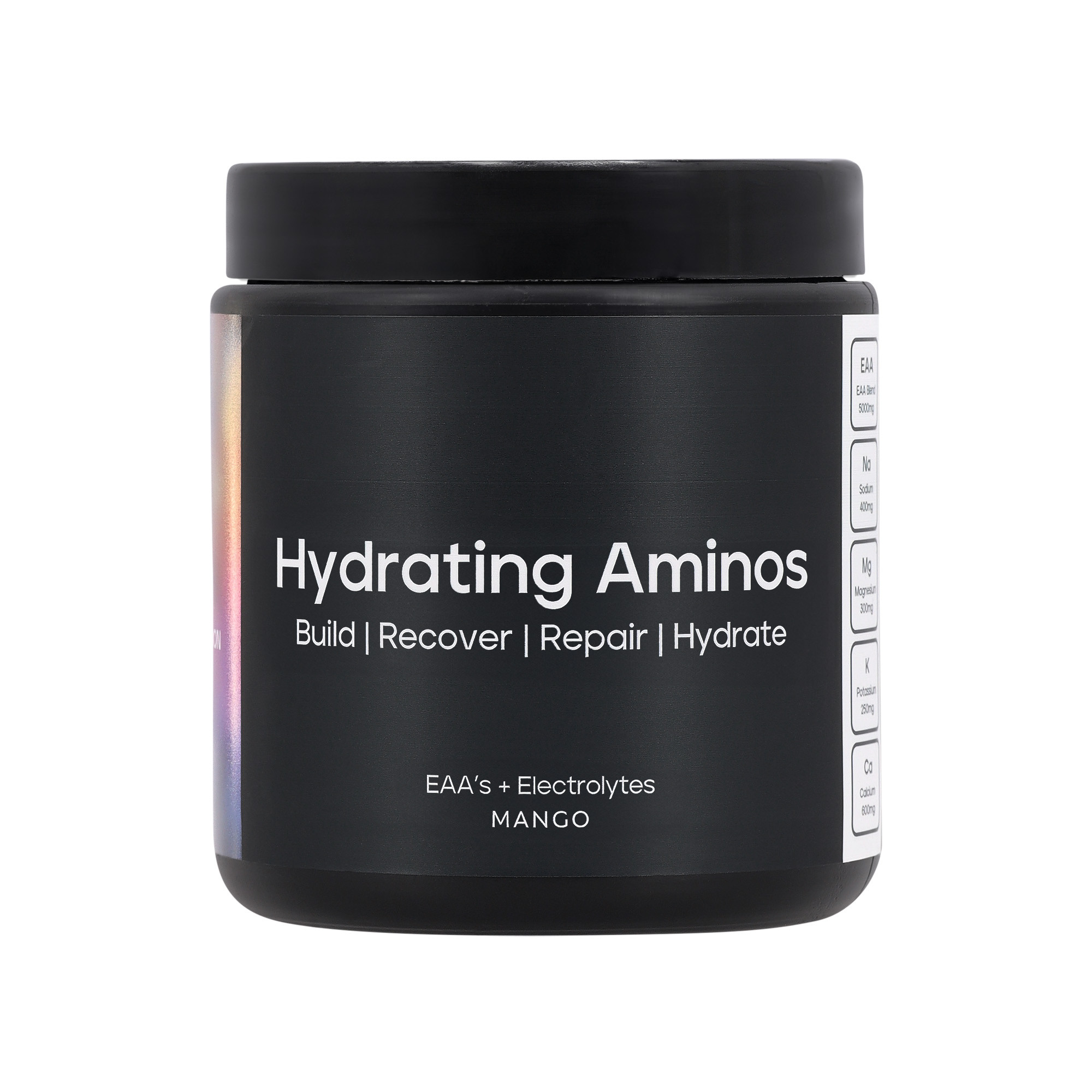
The ACSM literature places optimal pre-exercise sodium for moderate-duration moderate-sweat work at 300–700 mg. Bare Hydrating Aminos sits at 400 mg — inside the band, not above it.

Caldwell et al. · PMC9017998 · 2022
The takeaway Surfer sweat rate is a third of a runner's. The dose should follow. 400 mg is inside the band; 1,000 mg is for a different athlete in a different climate.
02— Amino-acid co-transport
ii.The faster pathway

Sodium also crosses the gut wall with amino acids.

Every sports drink built since the 1970s exploits one mechanism: sodium-glucose co-transport (SGLT1). Sodium and glucose are pulled across the gut wall together in a 2:1 ratio, and water follows by osmosis. This is why Gatorade has sugar — the sugar is not for energy primarily, it is the substrate that makes the water move.

The newer science: sodium also co-transports with amino acids via a different family of transporters (SLC6), and the stoichiometry is better — up to three sodium molecules per amino acid against glucose's two. The result is faster fluid uptake at lower osmolality, without the sugar load. This is the formulation move behind a new wave of EAA-hydration products in the US and UK. None of them are sold in South Africa.

Bare Hydrating Aminos is built around this pairing — 5g of essential amino acids alongside the electrolyte profile, opening the faster pathway.

SupplySide SJ · Amino-acid hydration co-transport
The takeaway Pairing EAAs with electrolytes opens a faster pathway than sugar-driven hydration — without the glucose. It is the first formulation upgrade the category has seen in fifty years.
03— Zero sugar
iii.No glucose

Eleven grams of sugar. Before a paddle.

The high-sugar travel hydrator drinks well in an aeroplane seat and works well enough for a hot Saturday on Clifton. It carries 11g of sugar per stick. For a pre-surf bottle at 5 in the morning, that is a sugar load you did not ask for, an insulin response you did not need, and an osmolality profile that can delay gastric emptying when over-concentrated.

The runners-and-cyclists endurance drinks — Tailwind, Gatorade Endurance — go further, sitting at 14 to 25 grams of sugar per serve. They are built for hour-three of a stage race, not for the kettle-and-bakkie window before a Muizenberg dawn patrol.

Bare Hydrating Aminos uses the amino-acid co-transport pathway specifically so the sugar isn't required. Zero grams, no insulin response, no slosh.

The takeaway Sugar is the old answer to the "make water move faster" problem. The amino-acid pathway is the new one. Zero grams of sugar in the flask is not a deprivation — it's the formulation working differently.
04— The leucine pre-load
iv.Pre-MPS

Two grams of leucine. Before the eccentric load.

The second job an EAA-hydration product does, that a pure electrolyte drink cannot, is pre-load the muscle-repair process before the damage starts. Leucine is the master switch for muscle protein synthesis (MPS) — at a circulating concentration roughly equivalent to a 2g oral dose, it triggers the cascade that initiates repair.

For the 40+ surfer, this matters more than it does for a 22-year-old. The age-related drop in MPS response — anabolic resistance — means the leucine signal needs to be present, loud, and well-timed. Wall et al. (2015) showed that a leucine-containing EAA bolus taken before eccentric load primes the repair pathway more effectively than the same bolus taken after.

You aren't just hydrating in the carpark. You are pre-loading Wednesday evening's recovery.

Wall et al. · PMC4633096 · 2015
The takeaway Two grams of leucine pre-paddle does a second job — it starts the repair signal before the muscle micro-damage. For the surfer over 40, this is the difference between Wednesday evening fatigue and Wednesday evening dialled.
05— SA-made
v.Local

R900 for grey-import salt. Or R549, made in Durban.

The international high-sodium leader is constantly quoted in the SA surf and CrossFit WhatsApp groups. It is also not distributed here. The product reaches South Africa via grey-import resellers at roughly R900 a box, with no SA support, no SAHPRA-compliant manufacturing trail, and a sodium dose engineered for a climate this country mostly does not have.

The high-sugar travel hydrator has the same problem at a similar price tier. Liquid IV is not sold here. What you get on the SA shelf, locally, is the gym-aisle effervescent tab (180 mg sodium, mass-market positioning) or the pharmacy-aisle gastro sachet (230 mg, glucose-driven, designed for ORS). Neither product was designed with the SA recreational surfer in mind.

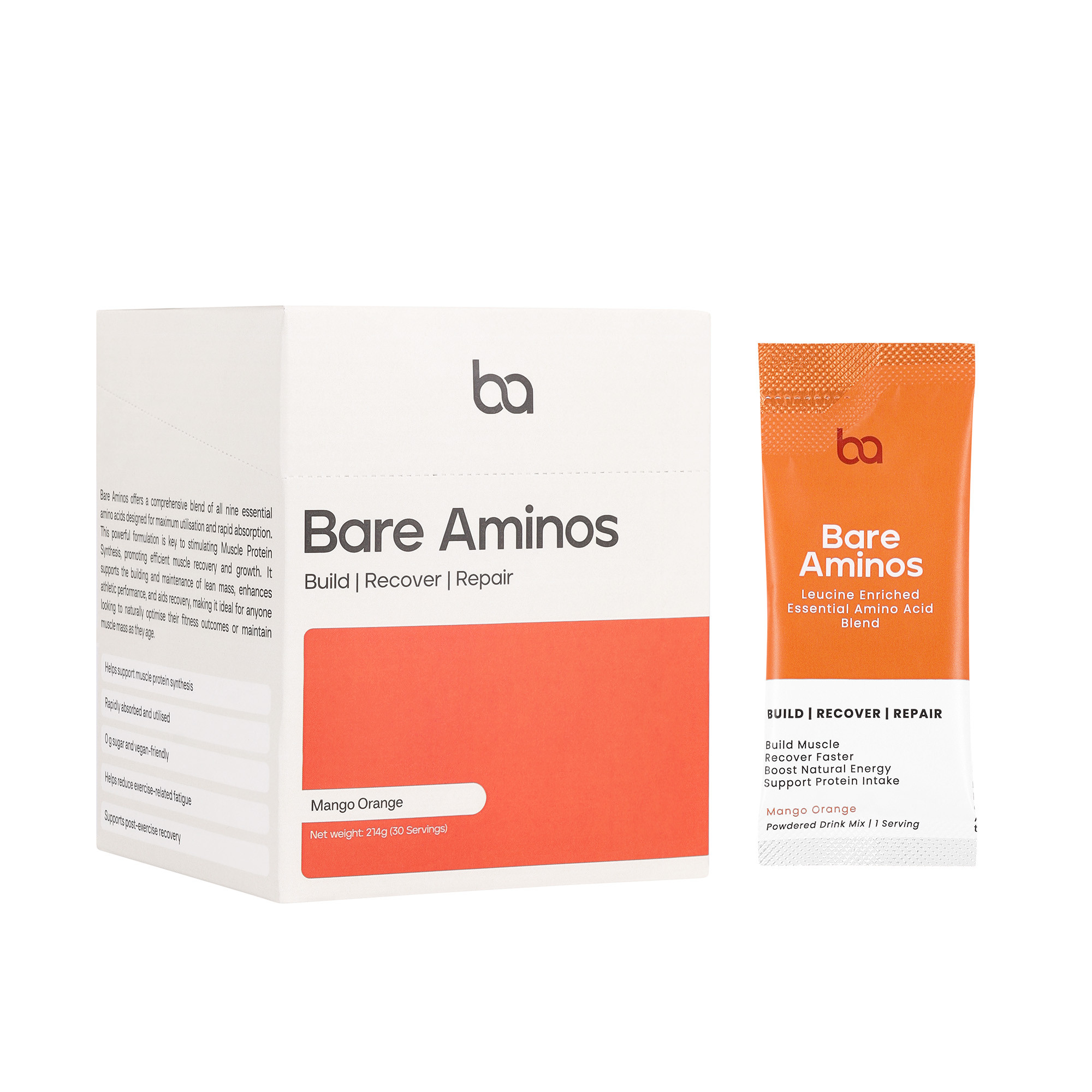
Bare Hydrating Aminos is the first SA-made hydration product that pairs EAAs with electrolytes, dosed for surfer physiology, manufactured under SAHPRA-compliant standards in Durban. R549 per tub, B2G1F standing offer. No exchange-rate maths.

The takeaway The product you actually want has not been on the shelf yet. Bare built it locally, dosed it for local conditions, and priced it without import friction. R549, not R900.
The conclusion

Five demands. One bottle built for them.

Bare Hydrating Aminos answers all five. 400 mg of balanced sodium, 5g of essential amino acids, 2g of leucine, zero sugar, SA-made. Sized for the surfer, not the desert runner. Designed for the flask between the kettle and the carpark.

See Hydrating Aminos → Or go straight to the product